Shoes take more punishment than anything else you wear, so they are one of the few places where paying more can genuinely cost less over time. That only holds if the extra money buys better materials and construction rather than a logo. A few checks in the shop will tell you which you are looking at.
Understand what the leather is
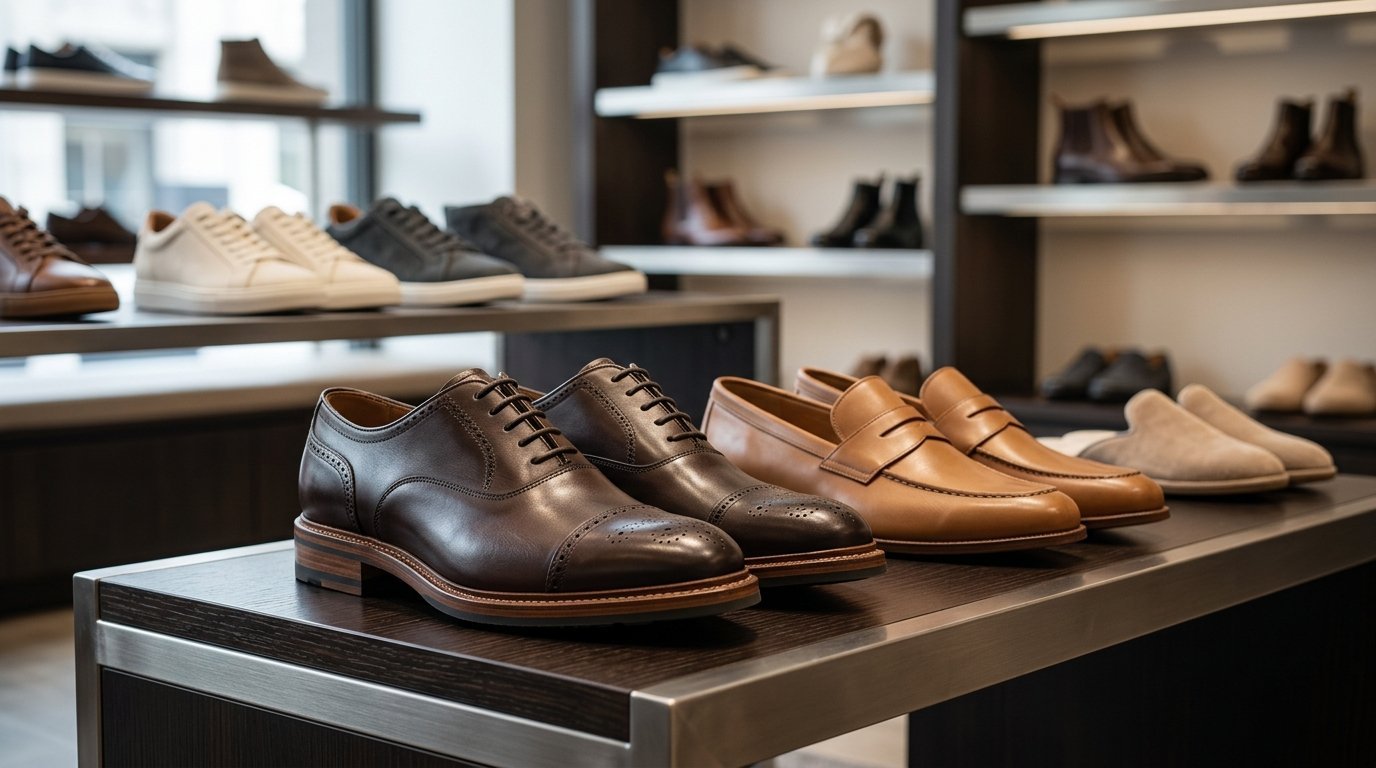
The word "leather" covers a wide range of quality. These are the terms you are most likely to see:
- Full-grain leather keeps the outer surface of the hide. It is the most durable type and develops character as it ages.
- Top-grain or corrected-grain leather has been sanded and finished for a more uniform look. It is still real leather but usually less hard-wearing.
- Suede and nubuck are soft, brushed finishes. They are comfortable and smart, but need more protection from rain.
- Bonded leather is made from leather scraps held together with a binder. It tends to crack and peel, and is best avoided for shoes you want to keep.
Good leather feels supple and smells like leather. A surface that looks very shiny and plastic-like, or creases into sharp white lines when you flex it, is usually a heavily coated lower grade.
Look at how the sole is attached
This is the detail that decides how long the shoe can live.
- Stitched soles, such as a Goodyear welt or a Blake stitch, are sewn to the upper. A cobbler can remove a worn sole and fit a new one, often several times.
- Glued soles, also called cemented, are cheaper and lighter. When the sole wears out or comes away, the shoe is usually at the end of its life.
Turn the shoe over and look along the edge where the sole meets the upper. Visible stitching running around the edge is a good sign, though it is occasionally only decorative, so ask if you are unsure.
Check the inside
A leather lining absorbs moisture and helps the shoe last, while a synthetic lining can feel hot and wear through at the heel. Press on the insole: it should feel firm and supportive, not thin and spongy. Squeeze the heel from both sides too. It should hold its shape rather than collapse.
Get the fit right in the shop
Try shoes on later in the day, when your feet are at their largest, and wear the kind of socks you will normally wear with them. Walk around on a hard floor, not just on carpet.
- Your heel should stay in place without slipping as you walk.
- There should be a little space in front of your longest toe.
- The widest part of your foot should sit in the widest part of the shoe.
Leather softens and gives a little across the width, but it does not get longer. If a shoe is too short in the shop, it will always be too short.
Look after them and they will repay you
Care matters as much as construction. A few habits make a large difference:
- Do not wear the same pair two days running. Leather needs a day to dry out.
- Use shoe trees, or at least stuff the toes with paper, to keep the shape.
- Clean off dirt and apply a conditioner or polish every few weeks.
- Protect suede and nubuck with a suitable spray before the first wear.
- Replace heel tips and soles before they wear right through.
Buying a better pair for less
Classic styles change very little from year to year, so there is no penalty for buying last season's stock. End-of-season sales are a good time to step up to a better made pair. Before you pay, check our latest coupon codes to see whether there is an offer for the retailer you are buying from.