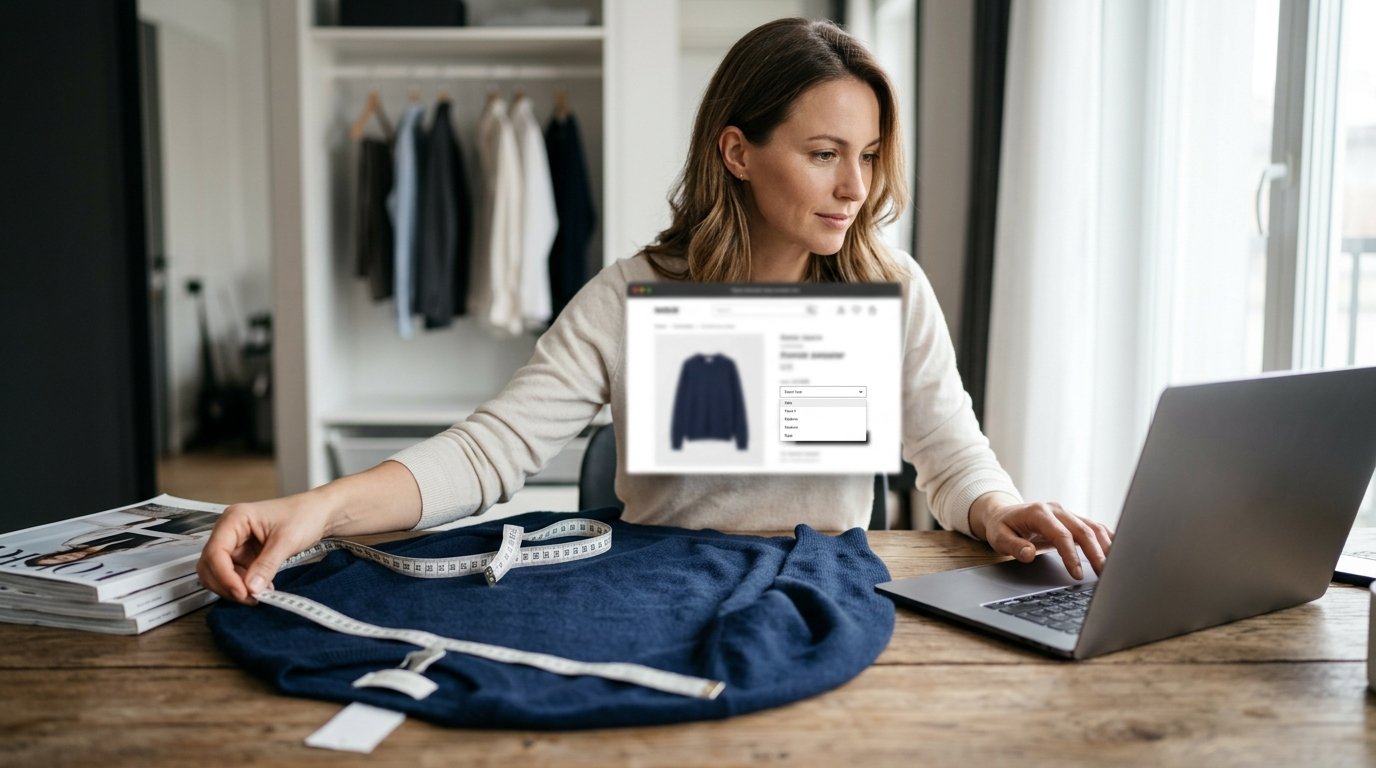
A size label is a brand's own shorthand, not a standard measurement. A medium from one retailer can be noticeably larger or smaller than a medium from another, and the same brand may cut differently from one range to the next. The label is a guess. Your measurements are not.
Take your measurements once
You need a soft tape measure and a few minutes. Measure over light clothing or underwear, keep the tape level and snug without pulling it tight, and write the numbers down in both centimetres and inches.
- Chest or bust: around the fullest part, with your arms relaxed at your sides.
- Waist: around your natural waist, the narrowest part of your torso, usually just above the navel.
- Hips: around the fullest part of your hips and seat.
- Inside leg: from the top of the inner thigh down to where you want the trousers to end.
- Shoulders and sleeve: useful for jackets and shirts. It is easier with someone to help.
Save the numbers in your phone. Check them again once or twice a year.
Use the size chart on the product page
Always open the size chart for the specific item, not a general one you remember from last time. Find the row where your measurements sit. If you fall between two sizes, the description of the fit usually decides it: size up for something described as slim or fitted, and stay with the smaller size for something described as relaxed or oversized.
Check which sizing system the chart uses. UK, US, EU and Australian sizes use different numbers for the same garment, and it is an easy thing to miss on an international site.
Measure a garment you already love
This is the most reliable method of all. Take a piece that fits you exactly the way you like, lay it flat, and measure it: across the chest from armpit to armpit, across the waist, the length from shoulder to hem, and the sleeve. Many retailers publish garment measurements as well as body measurements. Compare the two and you know how the new item will sit before it arrives.
Read the reviews for fit, not just for stars
Reviews often tell you what the chart cannot. Look for comments such as "runs small", "long in the sleeve" or "size down", especially from people who mention their own height and usual size. If a retailer notes the model's height and the size they are wearing, use that as a reference too.
Fabric changes the fit
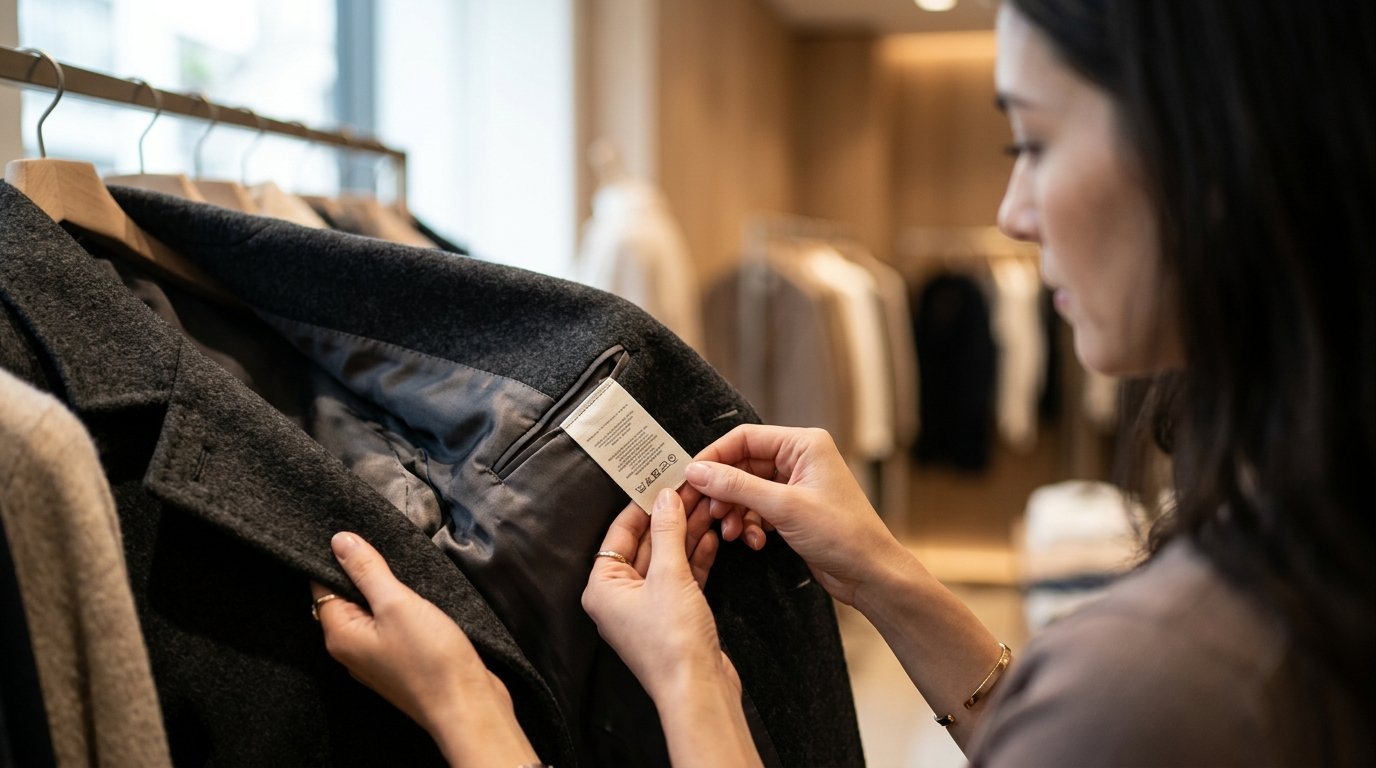
A fabric with stretch is forgiving, so a slightly small size may still be comfortable. A rigid fabric such as heavy cotton, linen or non-stretch denim is not, and it is safer to allow a little room. Some natural fabrics also shrink slightly on the first wash, so follow the care instructions.
Check the returns policy before you order
Even with careful measuring, some things will not fit. Before you pay, check how long you have to return the item, whether returns are free, and whether sale items are excluded. If you are genuinely unsure between two sizes and returns are free, ordering both and sending one back can be the cheaper option.
Once you know your size, it is worth a moment to look for a promo code or to find the retailer in our store list before you check out.