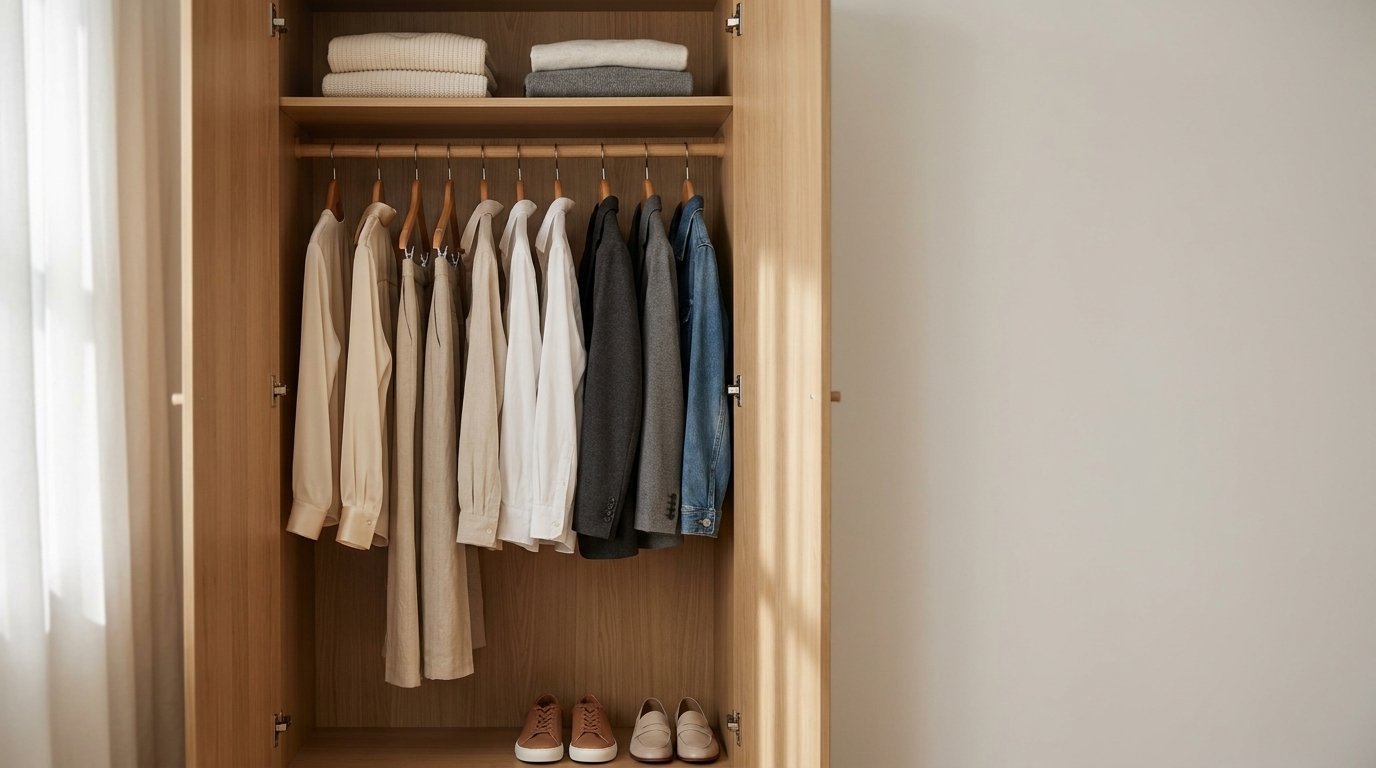
A capsule wardrobe is a small set of clothes that all go together. The idea is simple: when every top works with every bottom, a modest number of pieces produces a large number of outfits. You spend less, you get dressed faster, and you stop buying things that only match one other item you own.
You do not need to replace everything to get there. Most of a good capsule is already hanging in your wardrobe.
Start with what you already own
Before you buy anything, pull out the pieces you reach for every week. Lay them on the bed and look at what they share. It is usually a narrow range of colours and a couple of shapes that suit you. That pattern is your starting point, and it is more reliable than any list of "essentials" written by someone who has never seen you.
Set aside anything that does not fit, anything you avoid because it is uncomfortable, and anything that needs a specific item you do not own to work. Those are the gaps and the mistakes. Keep them in mind for the next step.
Pick a small colour palette
A capsule works because the colours are limited. A useful structure is:
- Two neutrals for trousers, skirts, coats and shoes. Navy, grey, black, beige and white are the common choices.
- One or two accent colours for tops, knitwear and accessories. Choose colours you already wear and get compliments in.
If a new item does not fit the palette, it will only go with one or two things, and it stops being part of the capsule.
The core pieces
The exact list depends on your work, your climate and your taste, but most capsules are built around the same roles:
- Two or three pairs of trousers or jeans that fit well
- Four or five tops you can wear alone or under a layer
- Two pieces of knitwear
- One smart jacket or blazer
- One coat suited to your weather
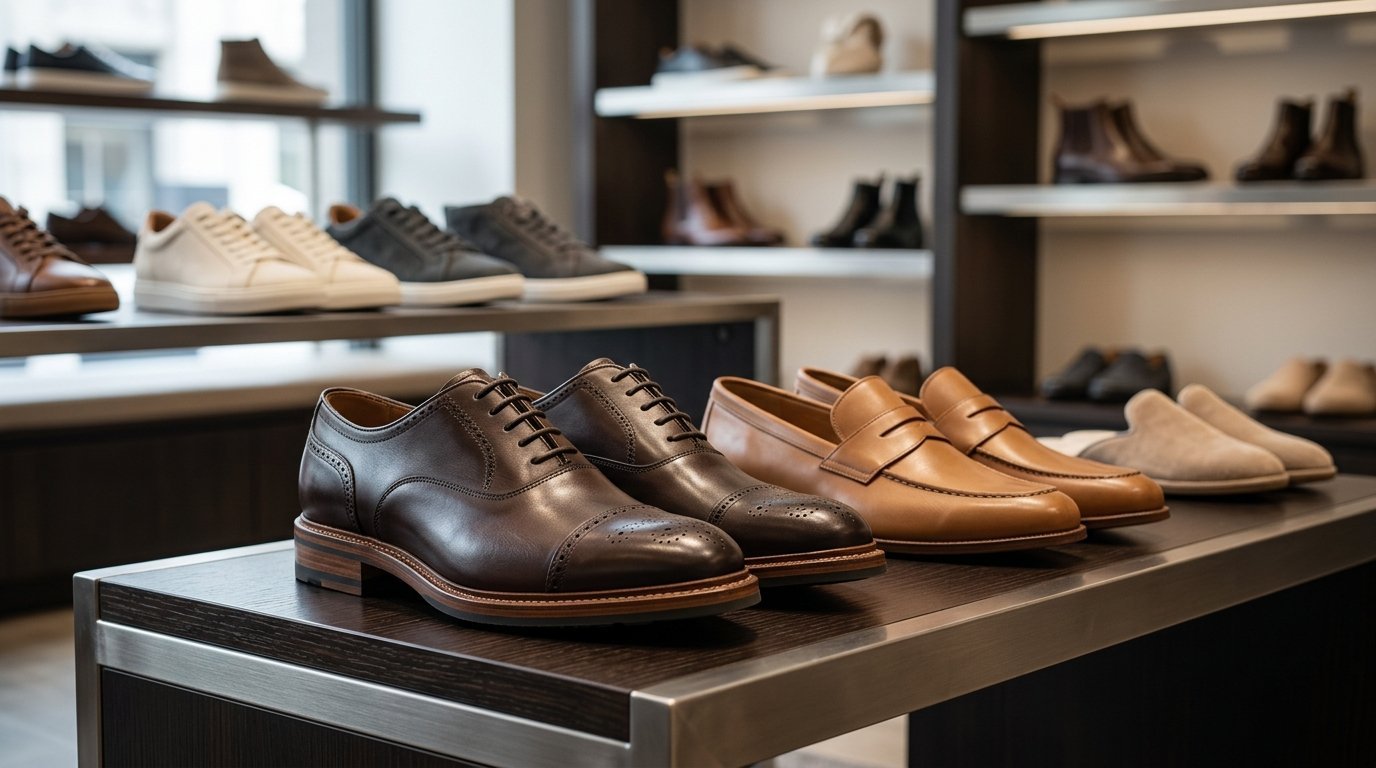
- Two pairs of everyday shoes and one smarter pair
Fill each role with the best version you already have. Only the empty roles go on the shopping list.
Where to spend and where to save
Spend more on the things you wear most and that take the most wear: shoes, a coat, and trousers. A higher price is easier to justify when you divide it by the number of times you will wear the item. A coat worn a hundred days a year costs very little per wear, even if the price tag looked high.
Save on plain tops, T-shirts and anything trend-led. These wear out or date quickly whatever you pay.
Add slowly, and buy at the right moment
Buy one piece at a time and wear it for a few weeks before adding the next. This keeps the list honest, because you learn what is actually missing rather than what looked good in a shop.
Because you know in advance what you need, you can wait for a sale or a discount code instead of paying full price in a hurry. Check our latest coupons before you check out, and keep the list on your phone so a good offer does not turn into an unplanned purchase.
A quick test before every purchase
Ask three questions. Does it fit the palette? Can I name three outfits I would wear it with, using clothes I already own? Would I still buy it at full price? If the answer to any of them is no, leave it on the rail.