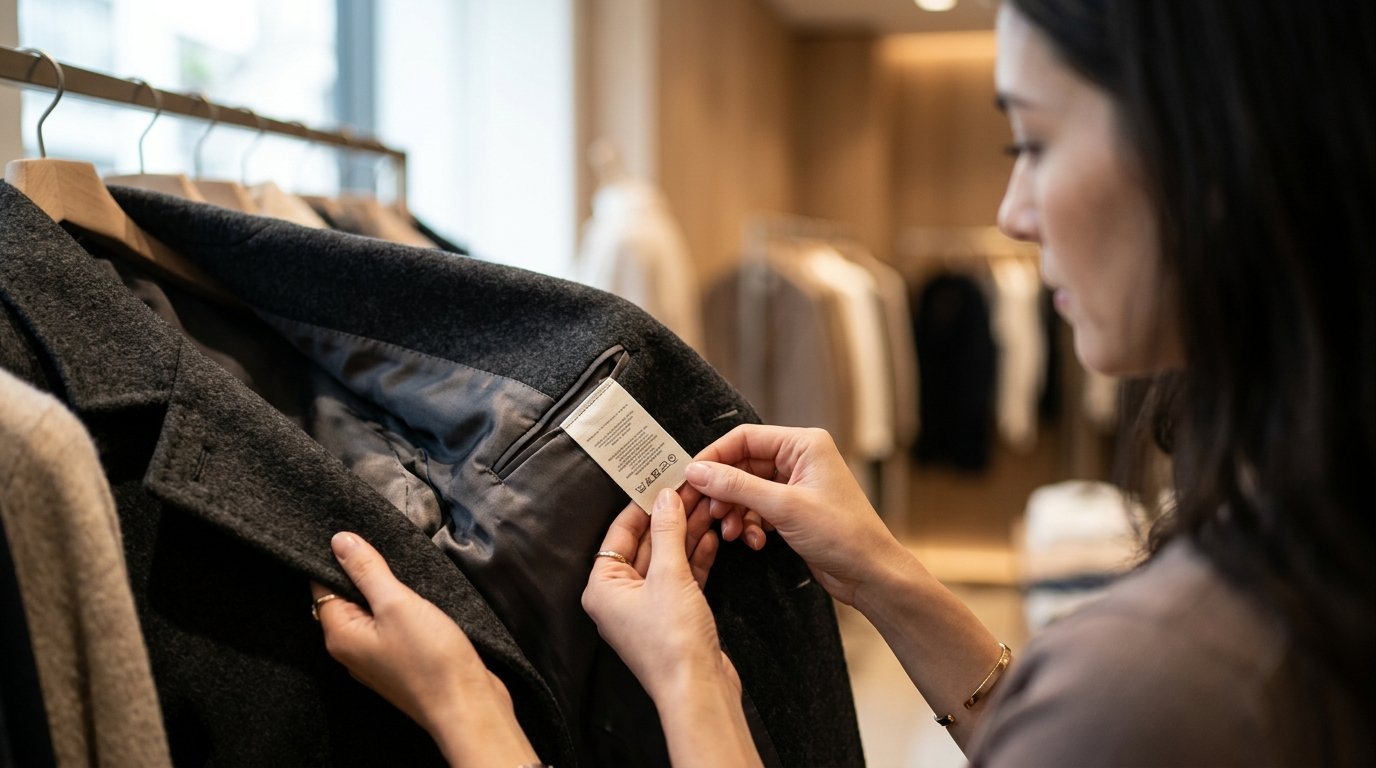
Two jackets can look identical on the hanger and age completely differently. One keeps its shape for years; the other bobbles, twists and loses a button in a season. The difference is rarely visible from across the shop, but it is easy to find once you pick the garment up. These checks take about two minutes.
Read the fabric label first
The composition label, usually sewn into a side seam or the lining, lists what the fabric is made of by percentage. It is the single most useful piece of information on the garment.
- Natural fibres such as cotton, wool, linen and silk generally breathe well and feel comfortable against the skin.
- Synthetic fibres such as polyester, acrylic and nylon are durable and cheap, but tend to hold heat and can bobble.
- Blends are not automatically worse. A small amount of elastane helps trousers keep their shape, and a little nylon makes wool socks last longer.
What matters is whether the fabric suits the job. A coat described as "wool" that turns out to be mostly polyester will be less warm than it looks. The label will tell you before the price tag does.
Feel the weight and hold it to the light
Hold the fabric up towards a window. If you can clearly see your hand through a shirt or a T-shirt that is not meant to be sheer, the fabric is thin and will wear through quickly. A denser weave or knit usually lasts longer and hangs better.
Scrunch a handful of the fabric for a few seconds and let go. If it stays heavily creased, expect to iron it every time you wear it.
Look at the seams
Turn the garment inside out. Seams are where cheap construction shows.
- Stitches should be small, even and straight, with no loose threads.
- Gently pull the fabric on either side of a seam. If you can see daylight between the stitches, it will come apart under strain.
- Raw edges inside should be neatly finished rather than left to fray.
- On a patterned fabric, stripes and checks should line up across the seams. Matching them takes extra cloth and care, so it is a good sign.
Check the details
Buttons should be sewn on firmly, with the buttonholes stitched densely and cleanly. Run the zip up and down: it should move smoothly and lie flat. A spare button sewn inside is a small sign that the maker expects the garment to be kept.
In a jacket or coat, look at the lining. It should be attached neatly, with a little slack so it does not pull when you move your arms.
Read the care label too
The care symbols tell you how much work the garment will be. Something marked dry clean only adds a cost every time it needs cleaning, and a hand wash only item is easy to ruin on a busy week. Neither is a reason to walk away, but it should be part of the decision.
Checking quality when you shop online
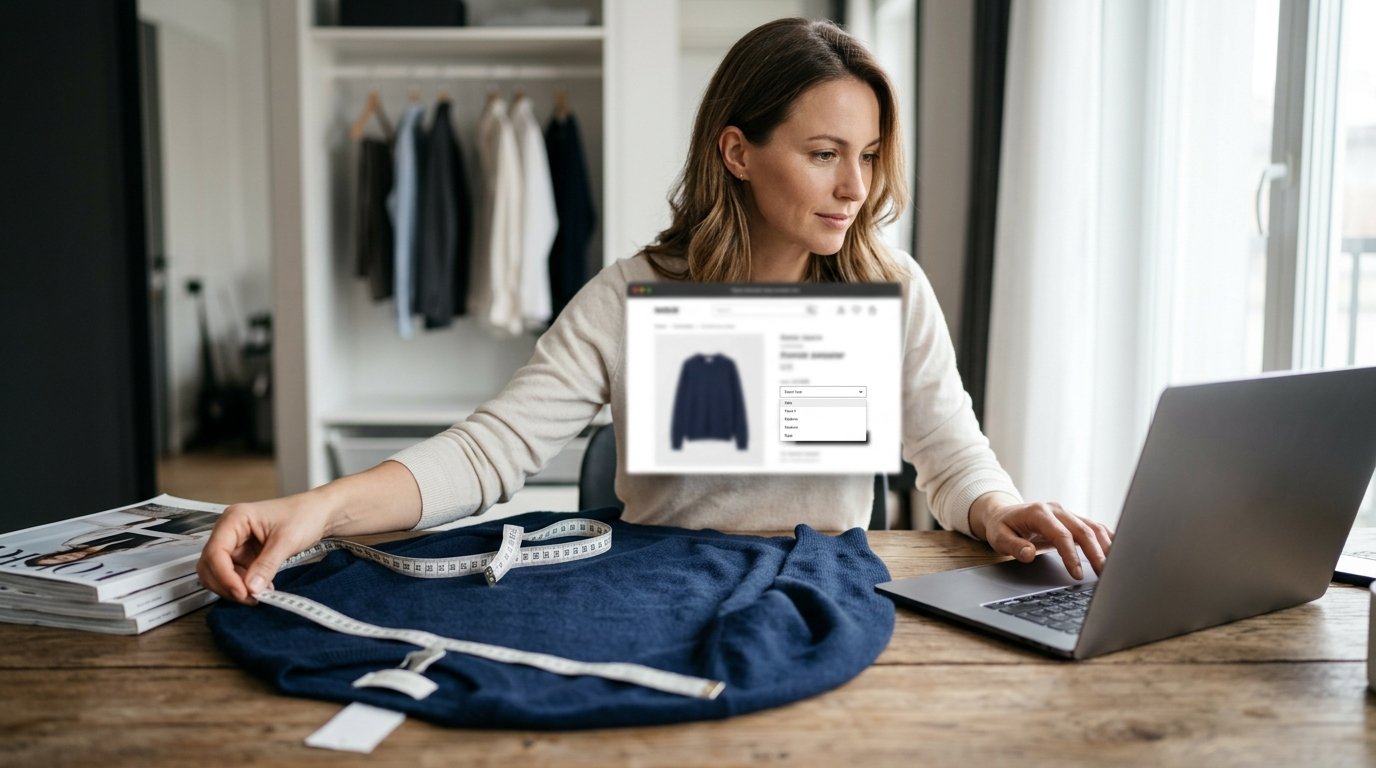
You cannot touch the fabric, so use what the listing gives you. Look for the full composition, the fabric weight if it is stated, and close-up photos of seams and fastenings. Read reviews that mention washing and wear after a few months, not only how it looked on arrival. And check the returns policy before you order, so a disappointing fabric is not an expensive mistake.
Good quality does not have to mean full price. Once you know a garment is well made, it is worth looking for a discount code before you buy it.